Archives
- 2018-07
- 2019-04
- 2019-05
- 2019-06
- 2019-07
- 2019-08
- 2019-09
- 2019-10
- 2019-11
- 2019-12
- 2020-01
- 2020-02
- 2020-03
- 2020-04
- 2020-05
- 2020-06
- 2020-07
- 2020-08
- 2020-09
- 2020-10
- 2020-11
- 2020-12
- 2021-01
- 2021-02
- 2021-03
- 2021-04
- 2021-05
- 2021-06
- 2021-07
- 2021-08
- 2021-09
- 2021-10
- 2021-11
- 2021-12
- 2022-01
- 2022-02
- 2022-03
- 2022-04
- 2022-05
- 2022-06
- 2022-07
- 2022-08
- 2022-09
- 2022-10
- 2022-11
- 2022-12
- 2023-01
- 2023-02
- 2023-03
- 2023-04
- 2023-05
- 2023-06
- 2023-07
- 2023-08
- 2023-09
- 2023-10
- 2023-11
- 2023-12
- 2024-01
- 2024-02
- 2024-03
- 2024-04
- 2024-05
-
Our surprising results show that
2024-05-20
Our surprising results show that AAD-treated tumors adjacent to adipose tissues and in steatotic liver continue to grow in the presence of a minimal number of microvessels. In non-adipose tumor models, the similar degree of vascular suppression is translated into marked suppression of tumor growth.
-
AR is expressed in cell specific
2024-05-20
AR is expressed in cell-specific human ovarian follicles at all stages of follicular development [25]. Administration of androgens in animals demonstrated initiation of follicular recruitment, stimulation of early stages of follicular growth, and increase in the number of growing follicles [26,27].
-
br Selective Androgen Receptor Modulators SARMs
2024-05-20
Selective Androgen Receptor Modulators (SARMs) The AR and its endogenous ligands, androgens, are important for development and maintenance of muscle and bone, secondary sexual organs, and development of other tissues (Mooradian et al., 1987). Although androgens are important for normal developmen
-
Coumarin The advantage of active immunotherapy is long
2024-05-20
The advantage of active immunotherapy is long-term antibody production from short-term drug administration at limited cost. Conversely, immune response may be inconsistent or lacking, especially in older individuals, and adverse reactions—if immunologically based—may also be long-lasting. Initial ex
-
Due to its unique histological architecture
2024-05-20
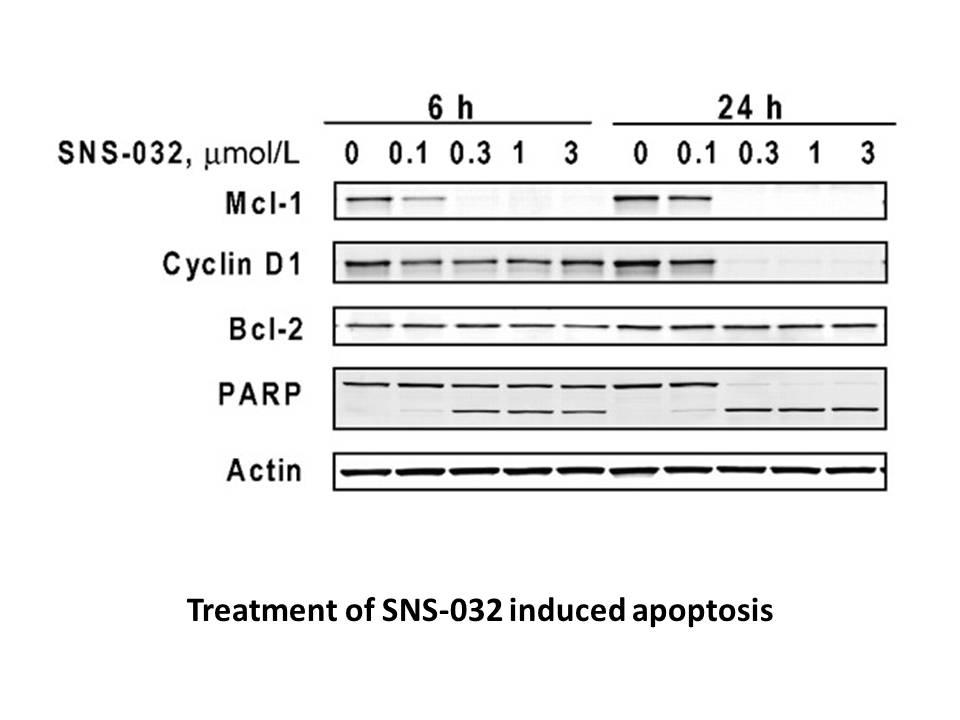
Due to its unique histological architecture and blood supply, the lung is one of the most susceptible organs under uncontrolled systemic inflammatory circumstance [16]. Several studies have reported the anti-inflammatory benefits of metformin in acute lung injury induced by lipopolysaccharide (LPS),
-
egfp mrna br Perspective AA LA and
2024-05-20

Perspective AA, LA and other PUFAs and their lipid metabolites play an important role in human diseases. 12/15-LOX which is the metabolic enzyme of them plays an important role in the pathogenesis-related diseases such as atherosclerosis, diabetic nephropathy, neurological diseases and other path
-
Within the PARP family TIPARP is most evolutionarily conserv
2024-05-18

Within the PARP family, TIPARP is most evolutionarily conserved with PARP12 (ARTD12) and PARP13 (ARTD13) [27,28,41]. All three proteins contain at least one RNA-type CCCH zinc finger domain, a poly-ADP-ribose binding WWE domain and a PARP catalytic domain (Fig. 1). PARP13 is catalytically inactive,
-
Thus far clinical data indicate that IDO inhibitors
2024-05-18
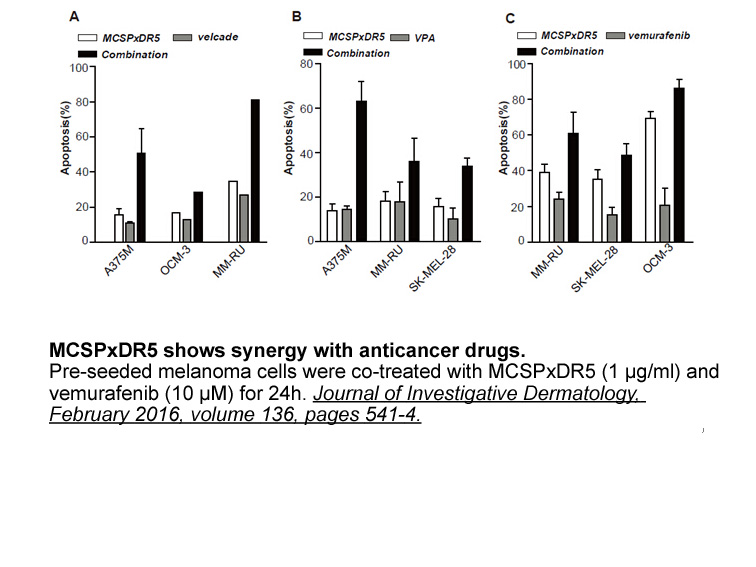
Thus far, clinical data indicate that IDO1 inhibitors have manageable toxicity, albeit with a relatively short period of treatment in a small number of patients. KYN is a pluripotent mediator and key intermediate for the synthesis of a host of downstream KP metabolites that are implicated in inflamm
-
br Conflict of interest br Acknowledgement
2024-05-18
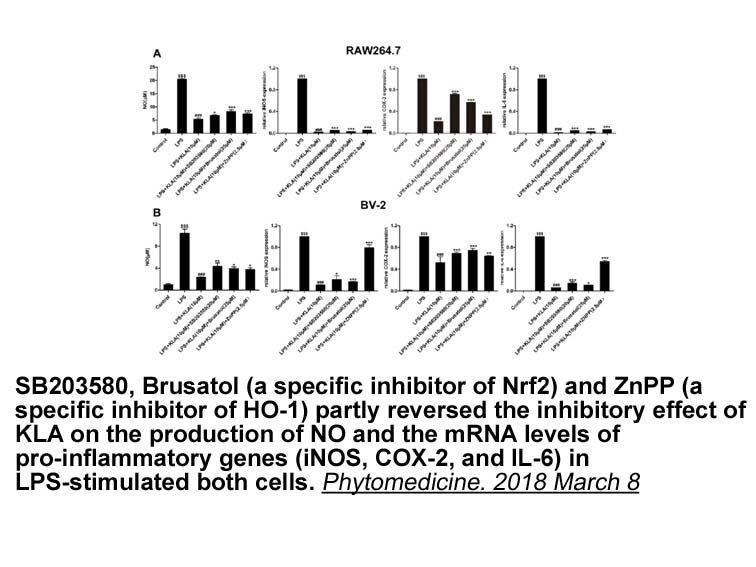
Conflict of interest Acknowledgement This study was supported by a grant from University Grants Commission - Basic Scientific Research (UGC-BSR), New Delhi, India (UGC-BSR No:F-7-115/2007). Introduction The G protein-coupled receptors activated by extracellular adenosine (Ado), called Aden
-
In the vasculature it is known
2024-05-18
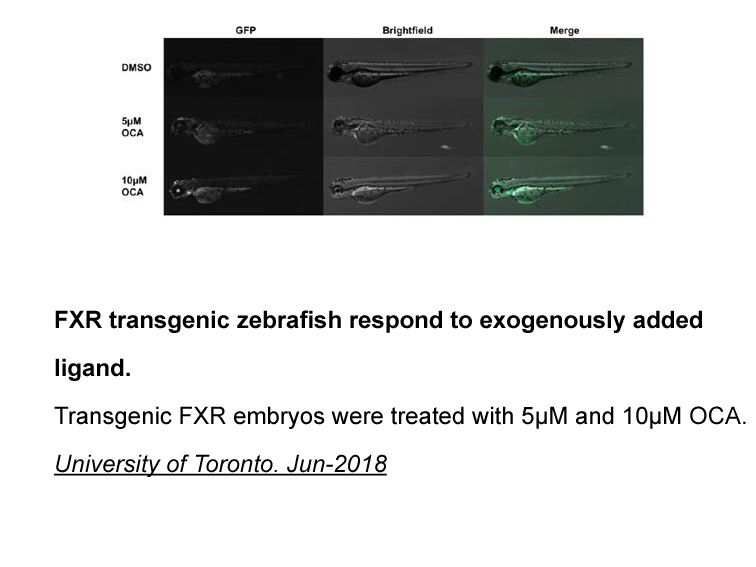
In the vasculature, it is known that A2A and A2B adenosine receptors are stimulatory for adenylyl-cyclase, leading to cyclic-AMP (cAMP) production and vasodilation, while the A1 and A3 adenosine receptors are linked to the inhibitory Gi, suppressing adenylyl-cyclase and favoring contraction. However
-
Macrophage polarization is linked to
2024-05-18
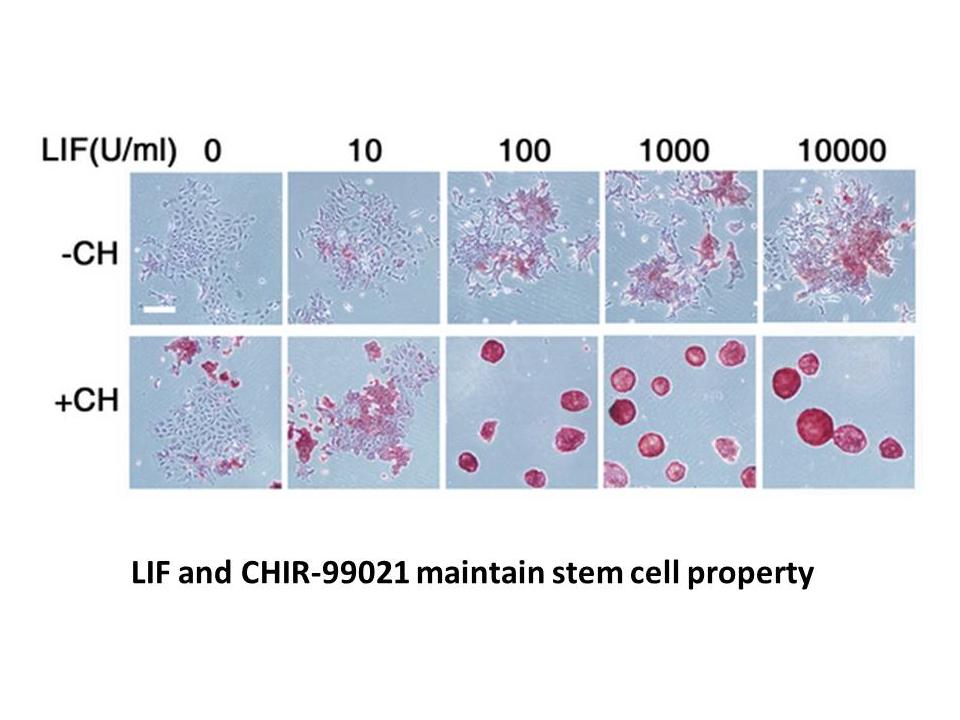
Macrophage polarization is linked to activation of the ligand-dependent transcription factor PPARγ. Recently, Odegaard et al. demonstrated with a macrophage-specific deletion of PPARγ in mice that alternative macrophage activation is impaired [14]. We provided evidence that contact to apoptotic Acit
-
Similar to V the temporal neocortex
2024-05-18
Similar to V1, the temporal neocortex of mammals, including the primary auditory cortex (A1), is densely innervated by 5-HT fibers originating mainly in the dorsal raphe nucleus (Campbell et al., 1987, Harding and Paxinos, 2004, Törk, 1990), and the major bv8 of 5-HTRs are expressed throughout the
-
br Co http www apexbt com media diy
2024-05-18
Conclusions This paper is the first meta-analysis about the association between SRD5A2 V89L polymorphism and hypospadias risk. The results of this meta-analysis have revealed that V89L polymorphism definitely increases the risk of hypospadias, and the C allele is a genetic risk factor for hypospa
-
Investigating these possibilities will illuminate
2024-05-18
Investigating these possibilities will illuminate whether Atropine possess mechanisms to differentially detect ACLY-generated versus ACSS2-generated acetyl-CoA as well as define the functional relationship between histone acetylation levels and cellular functions and phenotypes. Given that ACLY dom
-
br Materials and methods br Results
2024-05-18
Materials and methods Results and discussion During recent years, recombinant ASK1 has been obtained by expensive baculovirus-insect cell ryanodine systems [20], [27]. In the present study, we constructed recombinant ASK1 and expressed in active form at high level in E. coli. Human ASK1 catal