Archives
- 2026-10
- 2026-09
- 2026-08
- 2026-07
- 2026-06
- 2026-05
- 2026-04
- 2026-03
- 2026-02
- 2026-01
- 2025-12
- 2025-11
- 2025-10
- 2025-09
- 2025-03
- 2025-02
- 2025-01
- 2024-12
- 2024-11
- 2024-10
- 2024-09
- 2024-08
- 2024-07
- 2024-06
- 2024-05
- 2024-04
- 2024-03
- 2024-02
- 2024-01
- 2023-12
- 2023-11
- 2023-10
- 2023-09
- 2023-08
- 2023-07
- 2023-06
- 2023-05
- 2023-04
- 2023-03
- 2023-02
- 2023-01
- 2022-12
- 2022-11
- 2022-10
- 2022-09
- 2022-08
- 2022-07
- 2022-06
- 2022-05
- 2022-04
- 2022-03
- 2022-02
- 2022-01
-
Pifithrin-μ A key limiting factor in the
2022-04-06
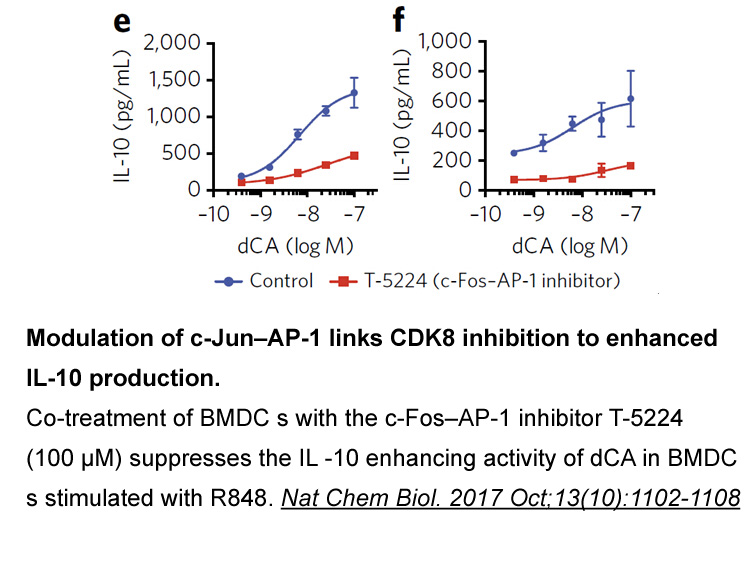
A key limiting factor in the semi-quantitative analysis of changes in the nuclear-to-cytoplasmic distribution of glucokinase is the large intercellular heterogeneity of Pifithrin-μ of glucokinase in both isolated hepatocytes in vitro and also in liver in vivo[13], [23], [24], [26], [36]. This necess
-
Sequences of hexokinases were initially
2022-04-06
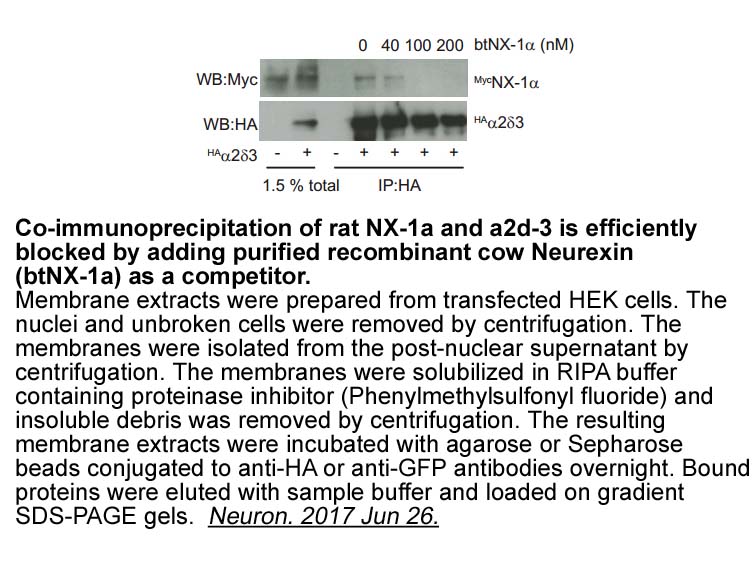
Sequences of hexokinases were initially deduced and predicted based on cDNA clones (Andreone et al., 1989, Schwab and Wilson, 1989, Schwab and Wilson, 1991, Griffin et al., 1991, Thelen and Wilson, 1991). Analysis of genome sequence data identified, in niclosamide to the 4 expected known hexokinase
-
The novel Ghsr IRES Cre knock in mouse line
2022-04-06
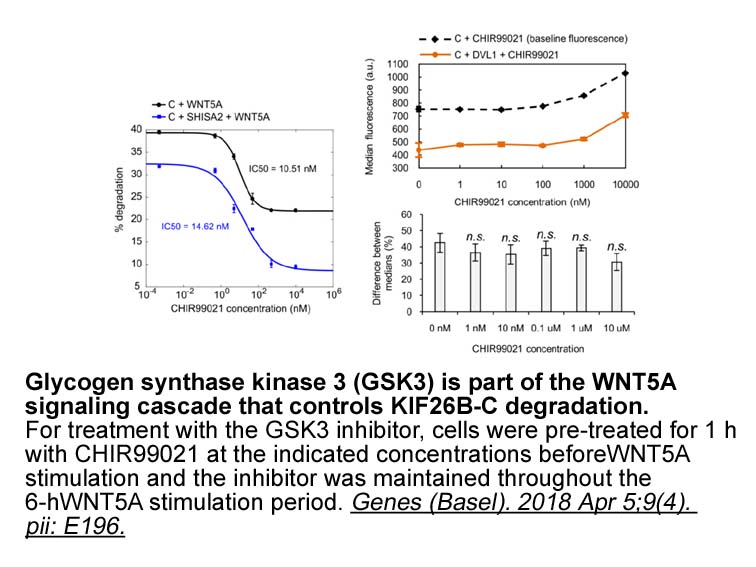
The novel Ghsr-IRES-Cre knock-in mouse line allowed us to deconstruct the involvement of MBH GHSR-expressing neurons in mediating food intake responses using chemogenetic modulation of their neuronal activity. In our studies, hM4Di DREADD virus injections to inhibit GHSR neurons targeted several nuc
-
Cx is the major molecule involved in the
2022-04-06
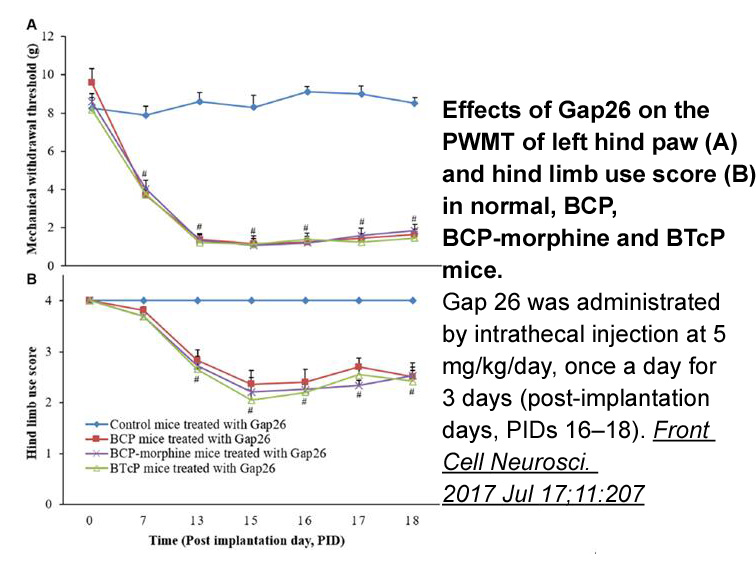
Cx43 is the major molecule involved in the dynamic life cycle of GJIC (Cusato et al., 2006). Initially generated Cx43 exist in the cytoplasm and correctly transfer it to the plasma membrane during its life cycle (Ji et al., 2018). To understand the toxic effects of MC-LR on GJIC, Cx43 localization w
-
The orientation of the immobilized
2022-04-06
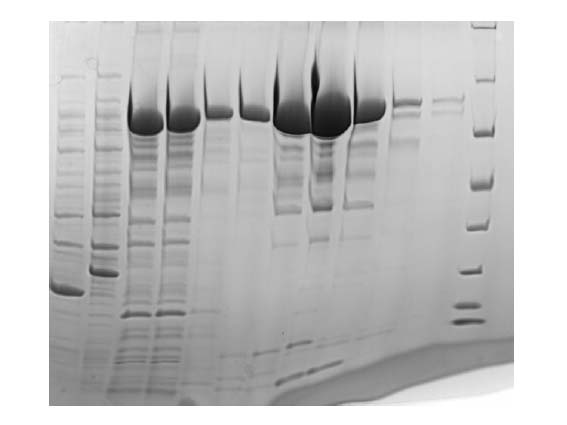
The orientation of the immobilized enzyme may affect its activity and stability and therefore the final biocatalyst performance. Since proteins present areas more prone to unfolding in their surface or near to it [36], the immobilization through these areas may improve the final biocatalyst stabilit
-
br Introduction Hepatocyte injury initiates and facilitates
2022-04-06

Introduction Hepatocyte injury initiates and facilitates inflammation in the course of liver disease progression. Thus, understanding the regulatory basis for sensing and responding to damage-associated inflammatory processes in the liver’s parenchymal cells is a primary issue in liver pathophysi
-
In this study it was demonstrated that also in
2022-04-06
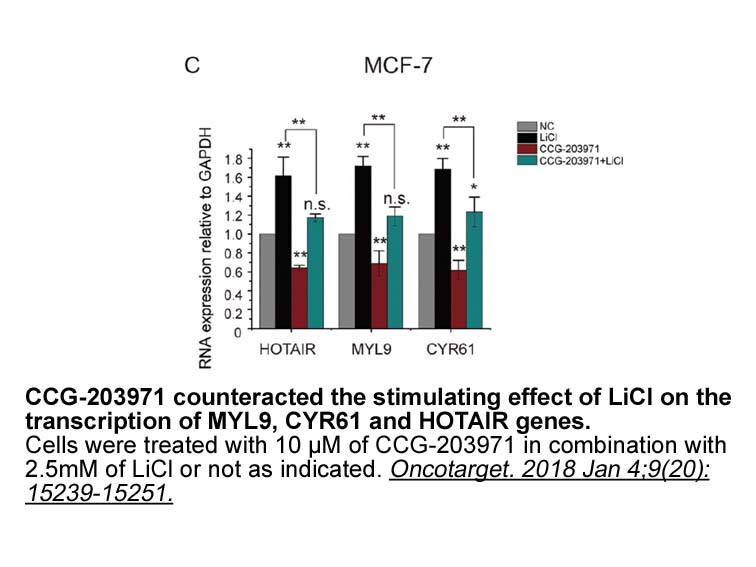
In this study it was demonstrated that also in mice chronically exposed to CS, lung inflammation persists after SC and is associated with a progressive alveolar loss and remodeling of respiratory tract, characterized by the onset of bronchial and bronchiolar GCM and peribronchiolar fibrosis. Persist
-
N6-Methyl-dATP sale Liver and muscle isozymes have been foun
2022-04-02
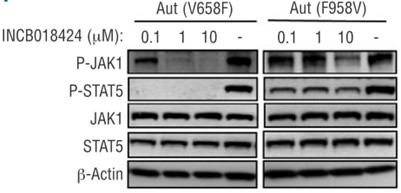
Liver and muscle isozymes have been found in vertebrate tissues [2], [5], [6]. The liver FBPase is recognized as a regulatory enzyme of gluconeogenesis. The muscle isozyme participates in the glycogen synthesis from lactate and in the regulation of glycolysis [7], [8], [9]. The basic difference betw
-
Erythropoiesis involves the proliferation and differentiatio
2022-04-02

Erythropoiesis involves the proliferation and differentiation of hematopoietic stem 20187 to mature RBCs. This process is a tightly-regulated to adjust rates of RBC production based on physiologic need. Fas-mediated apoptosis is one mechanism that controls erythropoiesis. The role of Fas-signaling
-
We then explored the possible
2022-04-02

We then explored the possible mechanisms by which integrin α5β1 was involved in the PHEV proliferation process. Normally, the virus activates integrin and induces its downstream protein activation to promote its own invasion and proliferation. Human papillomavirus type 16 (HPV16) binds to heparan su
-
ATN Ac PHSCN NH is a small peptide antagonist of
2022-04-02
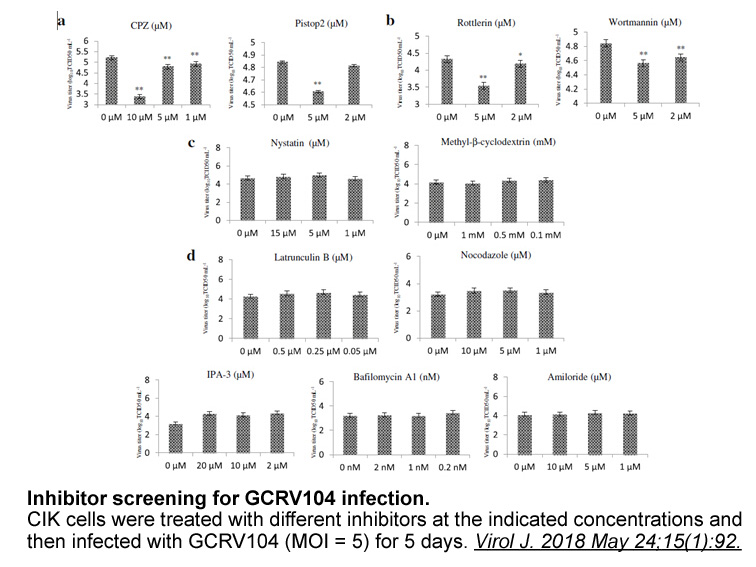
ATN-161 (Ac-PHSCN-NH2) is a small peptide antagonist of integrin α5β1, a recently developed anticancer drug that interacts with the N-terminus of the β1 region of integrin α5β1 to lock integrin α5β1 in its non-activated conformation (Wang et al., 2016). The drug has been tested in Phase 2 clinical t
-
The hyperacetylation of histone proteins
2022-04-02

The hyperacetylation of histone proteins by HATs is known to be associated with gene activation [51]. In particular, p300, which is a transcription factor having HAT activity, links activators to the transcription machinery at promoters [52]. The p300/CBP complex dynamically regulates hundreds of d
-
br Conflict of interest br
2022-04-02
Conflict of interest Acknowledgements This work was funded by the University of Turin (ex60% 2014), World Wide Style Project (WWS; University of Turin/Fondazione CRT) and University of Florence (ex60% 2014). ACR and AP designed the study; AP, EB and IO conducted the literature search and analy
-
HCV is a highly diverse
2022-04-02
HCV is a highly diverse virus with seven known genotypes (GT1–7) and multiple subtypes (Gower et al., 2014, Messina et al., 2015, Smith et al., 2014). Patients infected with HCV develop a heterogeneous population of viral species known as quasispecies due to low fidelity of the RNA-dependent RNA pol
-
br Conclusion and perspectives Guanylyl
2022-04-02
Conclusion and perspectives Guanylyl cyclases are ubiquitous enzymes that regulate critical functions in bacteria to humans. In mammals there are seven mGCs and activators of all members have now been identified. Mutations in the genes that encode mGCs or pathologic activation of these enzymes or
8395 records 504/560 page Previous Next First page 上5页 501502503504505 下5页 Last page